Meditation for students in exam weeks
Your revision pile is tall and your head feels crowded before the next paper.
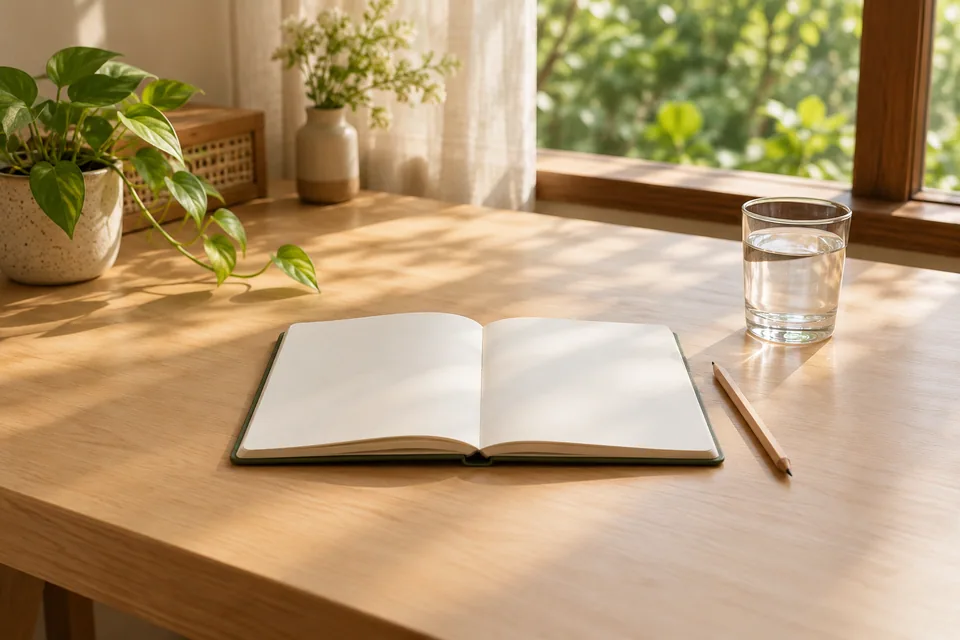
Exam weeks can make every minute feel owed to a subject. A short, planned pause can help you return to your notes with a clearer head, and it does not need to cost you much revision time.
Think of meditation here as a small reset between blocks, not another task on the timetable.
Where does a pause fit in revision?
It fits at the edges of time you already use. Before you open your books, between two topics, and after the last question on a practice paper are all natural spots.
The NHS suggests managing stress by breaking large tasks into smaller steps and planning ahead1. A pause fits that idea well: finish one small block, stop, then begin the next.
Try this: a three-step reset between topics
This takes about two minutes and needs no app.
- Close the book or turn the laptop slightly away. Sit with both feet on the floor.
- Take five ordinary breaths. Feel the air at your nose or the rise of your belly.
- Name one thing you will do next, such as “past-year paper, question one”, and begin.
If your thoughts wander to the exam itself, say “planning” or “worrying” in your head, then return to the breath. Coming back is the practice.
What can I do in the minutes before a paper?
Keep it small, because you may be in a corridor or a hall. Press your feet into the floor, let your shoulders drop and breathe out a little slower than you breathe in.
Skip last-minute cramming for these two minutes. You can look at your notes again afterwards if you wish.
Making it work in a hostel, a shared room or a busy home
Good places are easy to find if you are flexible.
- A chair at your desk, with the door closed or the curtain drawn.
- The edge of a bed, if you will not fall asleep there.
- A quiet bench outside the library or the surau or prayer room, if you use one.
- A bus seat or the LRT platform while you wait, when you are safely stopped.
If housemates are loud, sit anyway. Sound can be the anchor for your attention, so you do not need silence.
What if I fall asleep or cannot sit still?
Both happen. If you fall asleep, you were probably tired, and rest has its own place in exam weeks. Try sitting upright next time, or stand and feel your feet.
If you cannot sit still, walk slowly across the room and feel each step. Our walking meditation guide shows how.
Keeping it kind when results matter
A pause does not promise a grade, and it will not replace revision. It is simply a few quiet minutes that belong to you.
If a practice brings up distress, dizziness or old painful memories, it is fine to stop. Talking to a doctor, school counsellor or someone you trust is a good idea, and our support page lists where to begin.
Where to go next
For a wider look at staying on task, visit our focus and attention guides. If you are unsure how long to sit, read how long to meditate as a beginner, and our breathing exercises for stress are ready for a nervous moment.
A timer keeps breaks honest, so try the free meditation timer. It runs in your browser.
On a calmer evening, you might try Sadhguru’s free seven-minute guided meditation in the Miracle of Mind app, simply to see how a short guided sit feels.
Common questions
Will meditation take time away from my revision?
It can sit inside time you already have. A two-minute pause between topics, or a short sit before you open your notes, costs very little. If a break ever grows longer than planned, shrink it again. The aim is a calm start to the next block, not a second timetable.
What if my mind races before a paper?
That is common, and it is not a sign you are doing it wrong. Feel your feet on the floor, let your breath be ordinary, and name what you notice: nervous, tired, hungry. Naming it gently is enough. Then turn to the next small thing on your list.
Can I meditate in a hostel room or a shared house?
Yes. A chair, a bed edge or a quiet corner of the library works. Earphones can help with noise, as long as you are somewhere safe and not about to walk across a road. Sounds around you can also be the thing you rest your attention on.
How long should a break be during exam weeks?
Start with one to three minutes between revision blocks. When you have a calmer afternoon, you can try a longer guided session. A short break you really take beats a long one you keep promising yourself.
Sources
- The NHS suggests managing stress by talking to someone, breaking large tasks into smaller steps, staying active and planning ahead. NHS Every Mind Matters
Read next
When you want a calm voice to lead a longer pause, Sadhguru's free guided meditation in the Miracle of Mind app takes about seven minutes and fits between two revision blocks.