A household responsibilities conversation planner
You want to talk about who does what, without it turning into a quarrel.
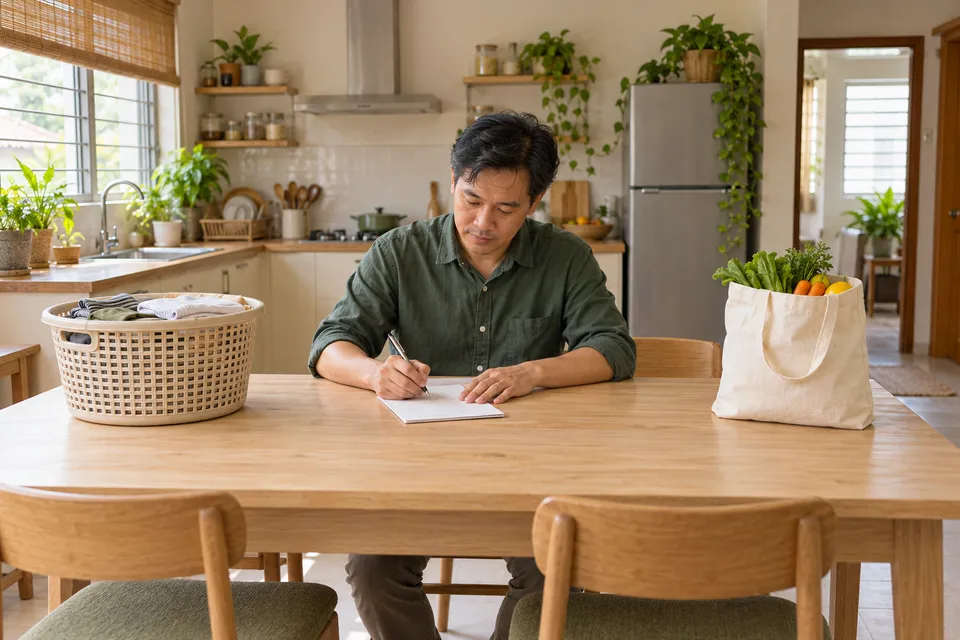
A calm talk about household responsibilities has five parts: a shared goal, a look at the facts, a listen, one agreement and a check-back date. Keep it short, kind and focused on one topic.
If every earlier attempt turned into a quarrel, a simple running order can help both sides feel safe enough to speak.
What do I do before the talk?
Prepare a little. It makes the talk shorter and kinder.
- Write down the one topic you want to cover. Only one.
- Note what you would like the outcome to be, in a single sentence.
- Take a minute of slow breathing, so you start settled. The slow breathing pacer can set the rhythm.
- Choose a time and tell the other person in advance, so it is not an ambush.
If you have not yet listed what needs deciding, begin with making a list of jobs that need discussion.
What is the running order?
Follow these five parts in order. Each one should take only a few minutes.
- Shared goal: “I would like our evenings to feel less rushed. Can we work on that together?”
- The facts: describe what happens now, without labels such as “always” or “never”.
- Listen: ask, “How does it look from your side?” and repeat back what you heard.
- One agreement: choose a single change, with a name, a task and a day.
- Check-back: set a time to look at how it went, such as next Sunday.
What opening lines work well?
Gentle openings keep the talk from becoming a defence. Here are some you can borrow:
- “I want us both to have time to rest. Can we look at the week together?”
- “I have been feeling stretched. Can we see what could be shared?”
- “Help me understand how the week looks for you.”
Use words that fit how your family speaks. In a Malaysian family, a respectful tone for elders matters, so greet them first and thank them for their time.
What if the talk gets tense?
Name it softly and pause. You might say, “Let’s take five minutes and come back.” Step outside, drink some water, then return.
A tense talk is not a failed talk. It is a sign that the topic matters. If the same hurt returns again and again, speaking to a counsellor can help, and our support page lists where to start.
How do I end with something that sticks?
End with one agreement that is small and clear. For example, “Ravi takes the Tuesday and Thursday dinner clean-up for two weeks.”
Then decide what finished looks like, so nobody argues later about whether it was done. The guide on agreeing what a completed task means covers this step.
Where to go next
Choose one topic, write your opening line and pick a time this week. For more on speaking and listening at home, visit communication and everyday relationships. You can find more in our household load and family organising guides.
When you want a calm moment before the talk, Sadhguru’s free seven-minute guided meditation in the Miracle of Mind app is there if you would like it.
Common questions
When is the best time to have this conversation?
Pick a calm time when nobody is rushing, hungry or tired. After a weekend meal or during a quiet evening works well. Avoid starting it in the middle of an argument, or when someone has just come home from a long day.
How do I begin without sounding like I am blaming?
Start with what you want, not with what they did wrong. For example, say you would like evenings to feel less rushed and you want to work it out together. Speak about the situation and about your own feelings.
Who should be part of the conversation?
Everyone who shares the work and is old enough to take part. For a couple, that may be just two people. In a multi-generation home, include the grandparents. Children can join for the parts that involve them.
What if we agree but nothing changes?
Agree on one small step with a name and a day, then check it at your next short talk. Big promises fade quickly. A single clear job that is actually done builds trust for the next one.
Read next
Before you sit down to talk, a short guided meditation can help you slow your breathing and start from a calmer place.