Quiet and active time in a small home
The children need to move, someone needs quiet, and the flat is only so big.
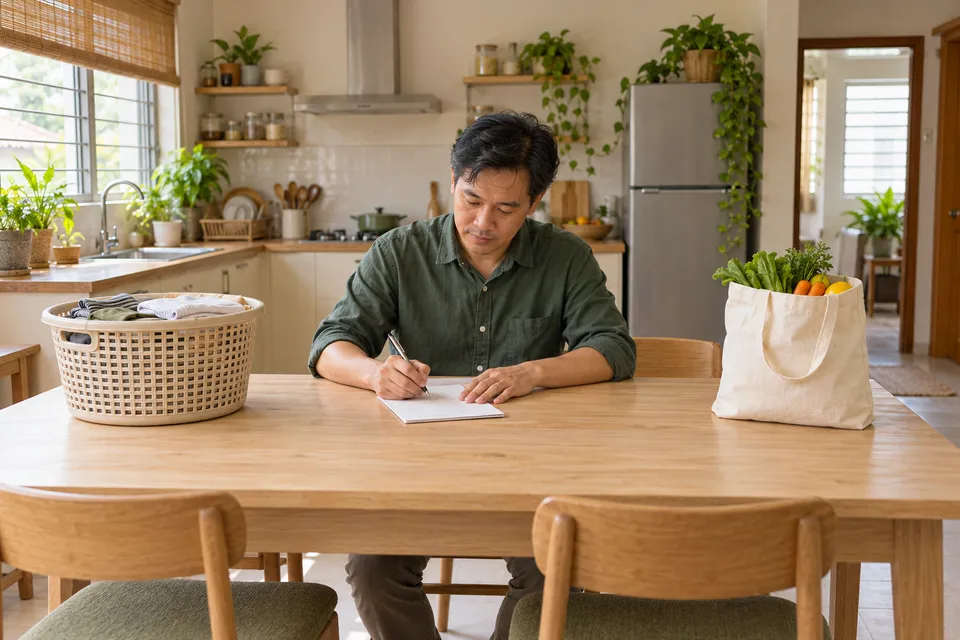
In a small home, the answer is to take turns rather than to find more space. Split the day into quiet blocks and active blocks, and tell everyone which one it is.
That way noise is not a fight. It is simply something with a time slot.
Why is a small home so tiring for everyone?
Because there is nowhere for sound or movement to go. A child bouncing a ball, a parent on a work call and a grandparent resting can all be in earshot of each other.
Everyone ends up tense, waiting for the next interruption. A plan lets people relax because they know when their turn comes.
How do I split the day into quiet and active blocks?
Start with the fixed quiet needs: meetings, naps, exam revision, prayer or rest times. Then fit active time around them.
A simple pattern for a school-holiday day might look like this:
- A quiet block in the morning for calls and focused tasks.
- An active block late morning, when the energy is up.
- A quiet block after lunch, when it is hot and bodies want rest.
- An active block in the late afternoon, outdoors if the weather allows.
- A calm block after dinner for winding down.
Adjust the shape to your household. A shift worker who sleeps by day needs the quiet block to match their sleep, not the clock.
What are low-noise ways to move?
Movement does not have to thunder. Here are some ideas that suit a flat with neighbours below.
- Stretching and yoga-style poses on a mat.
- Slow dancing with the volume low.
- Animal walks, such as bear crawls or crab walks, on a rug.
- Balloon games where the balloon must not touch the floor.
- A short walk to the shop or around the block.
Save the louder games for the playground, a park or a relative’s garden.
Try this: a ten-minute block swap
Use this when a quiet block is ending and the active block begins.
- Say aloud, “Quiet time is over, active time starts.”
- Put away the quiet things: pens, laptops, books.
- Clear a path and roll out the rug or mat.
- Set a timer for the active block and let everyone move.
- When it ends, take one slow breath together and return to quiet things.
Our slow breathing pacer can lead that last breath if you would like a steady rhythm.
What about shared rooms and different needs?
Use headphones, a closed door or a curtain as a visible “quiet” signal. A child can wear a paper badge that says “reading time” so the others can see.
If one person’s need is truly urgent, such as a work interview, the household agrees to shift the schedule that day. Our guide on keeping a routine when one room does everything goes deeper on this.
When should I ask for more help?
If the noise and crowding are wearing you down, that is understandable and worth saying out loud to someone you trust. Our support page lists places to start.
Where to go next
Look at the whole picture on our household load and family organising guides. For long school breaks, see planning household tasks during a school-holiday week.
If one corner has to serve two people, a simple agreement for a shared work corner fits well.
When the active block is over and the flat settles, Sadhguru’s free 7-minute guided meditation in the Miracle of Mind app is an optional way to share a quiet few minutes.
Common questions
How do I keep children active in a small flat?
Short bursts work well: a dance to one song, a towel obstacle course, animal walks down the corridor. Put them in the active block of the day and keep a soft rug for landing. Walks around the block or a visit to the playground can take the rest.
What if my neighbours complain about noise?
Put jumping and running at hours when most people are up, and use slow movement when floors below may be resting. Soft mats and socks help. A friendly word with the neighbour about your plan can settle more than the noise itself.
Can quiet and active time share the same room?
They can, if the times are separate. Treat the room as a quiet space for a set block, then an active space for the next one. A rug that rolls up, or chairs that push back, makes the switch take a minute.
What counts as a quiet activity?
Anything that needs little sound: reading, drawing, puzzles, writing, a call with headphones, resting with eyes closed. Quiet does not have to mean silent. It means low enough that someone else can think, sleep or hear a meeting.
Read next
After a loud active block, a short guided sit can help the whole flat shift gently into its next quiet stretch.